Free sample lesson · 7 Habits Chapter Study
Character Over Image
Why does a polished technique fail when character contradicts it?
Lesson 1 of the Wondering course 7 Habits Chapter Study
What You Will Learn
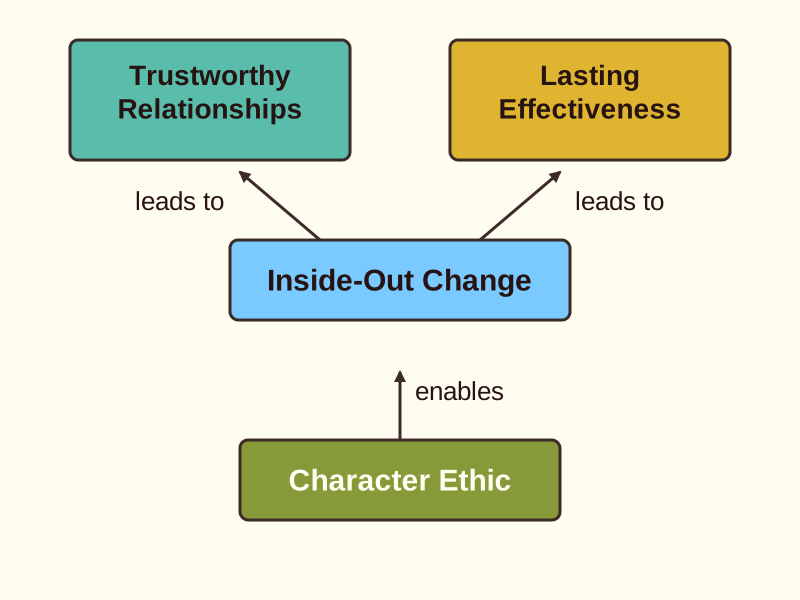
The opening frame prevents learners from treating the habits as quick tactics detached from character.
The Foundation of Character
Many people try to improve their lives by learning new social tricks or productivity hacks. These are often just image management.
True effectiveness grows from the Character Ethic. This means building your life on integrity, humility, and courage.
- Character Ethic
- Image Management
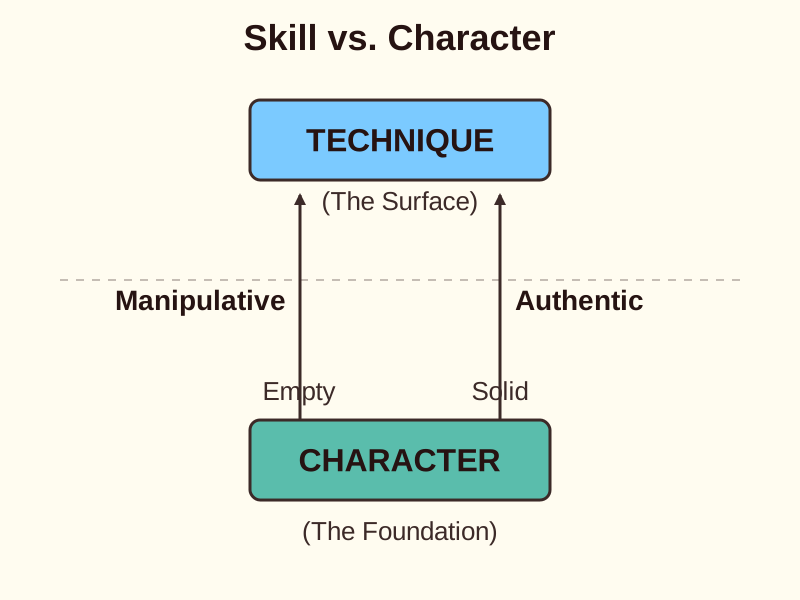
Without a strong foundation, even the best techniques will eventually fail. Character is what you are when no one is watching.
Technique vs. Reality
Imagine a manager who uses polite phrases in meetings but punishes anyone who shares bad news. The team will eventually stop being honest.
The manager has the right technique but lacks the character of justice and patience.
Skills are useful, but they become manipulative when they are separated from a trustworthy character. Principles must come before personality tactics.
Change from the Inside Out
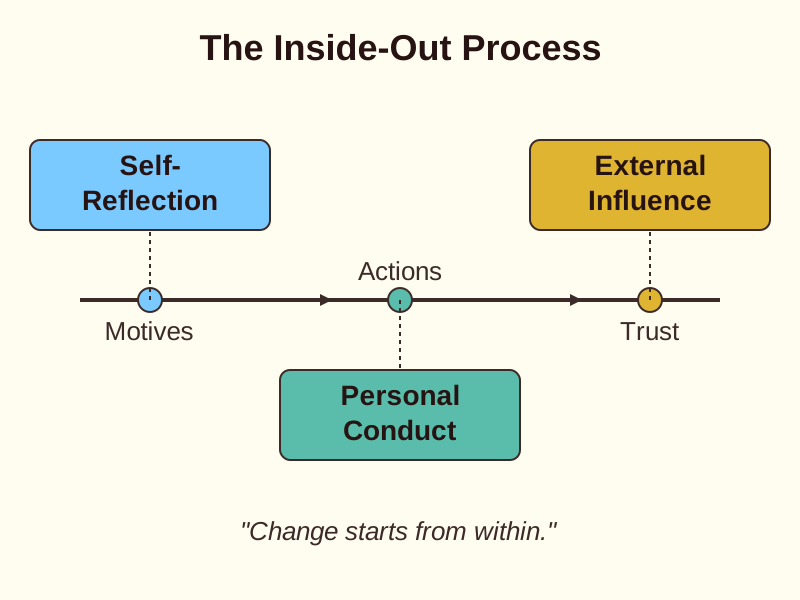
Inside-out change means looking at yourself before you try to change others. It starts with your own motives and conduct.
If a parent feels distant from a teenager, they might blame the child. An inside-out approach asks a different question.
Has the parent earned trust through listening and keeping promises? Real change begins by taking responsibility for your own actions first.
The Limits of Inside-Out
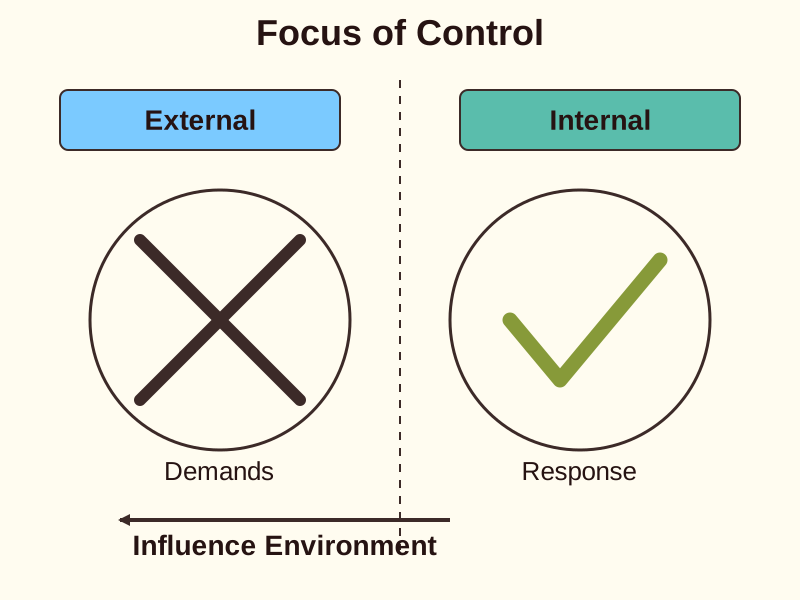
A common misconception is that inside-out change means ignoring external problems. This is not true.
It simply means you focus on what you can control. You change your perception and your response to the situation.
By working on yourself, you gain the influence needed to improve your environment. You lead by example rather than by demand.
Bringing It Into Daily Practice
- Check Motives: Examine if you are seeking to contribute or just seeking to be right.
- Adjust Conduct: Change your own behavior to model the respect you want to see.
- Build Trust: Consistently demonstrate character through your new actions.
Check yourself
The Character Ethic focuses on _____ rather than social tricks.
- internal integrity
- personality tactics
Answer: internal integrity
The Character Ethic is built on internal traits like integrity and humility, whereas image management relies on external social techniques.
To apply inside-out change, first _____, then _____, and finally _____ through consistent action.
Answer: To apply inside-out change, first check motives, then adjust conduct, and finally build trust through consistent action.
Inside-out change is a sequence: you examine your heart, change your behavior, and eventually earn the trust of others.
A manager uses 'active listening' techniques but secretly plans to ignore employee feedback. Why will this likely fail?
- The manager chose the wrong communication technique.
- The team will eventually sense the lack of integrity.
- Inside-out change requires changing the team first.
- The manager needs more productivity hacks.
Answer: The team will eventually sense the lack of integrity.
Techniques (image) are ineffective if they aren't backed by genuine character. Others eventually sense the gap between the skill and the person's true motives.
Keep going
This is lesson 1 of 18 in 7 Habits Chapter Study. Next up:
- Paradigms as Maps
- Principles and Capacity
- Maturity Continuum
- Choose Your Response
- Work Inside Influence
Wondering turns any topic into short lessons you can read, watch, or listen to, with practice questions and an AI tutor.