Free sample lesson · 19th-Century Imperial Russia
Imperial Reforms
Can a single decree change the fate of millions of serfs?
Lesson 1 of the Wondering course 19th-Century Imperial Russia
What You Will Learn
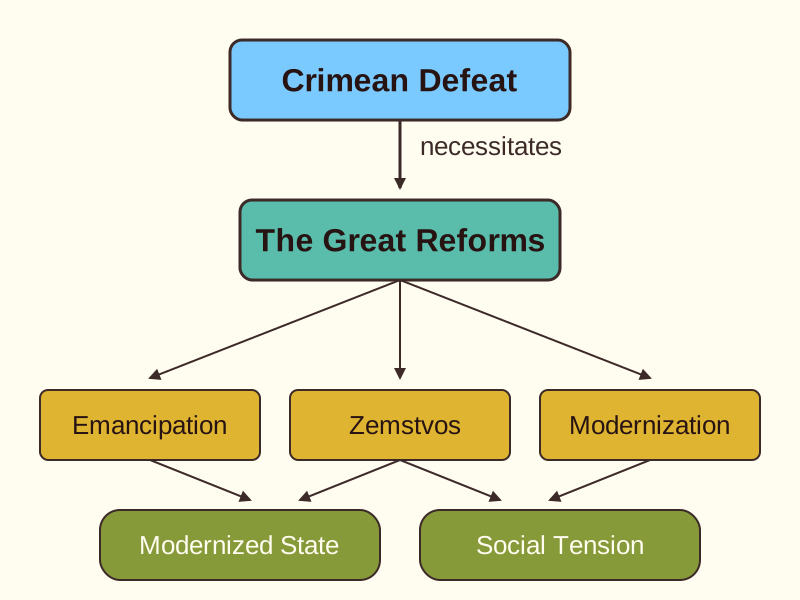
Understanding how the Tsars' personal decisions shaped the modern state.
The Crisis of the Empire
In the mid-19th century, Russia faced a major turning point. The defeat in the Crimean War exposed a painful truth.
Russia could not compete with industrialized Western powers. Its economy relied on ancient farming methods and the labor of enslaved peasants.
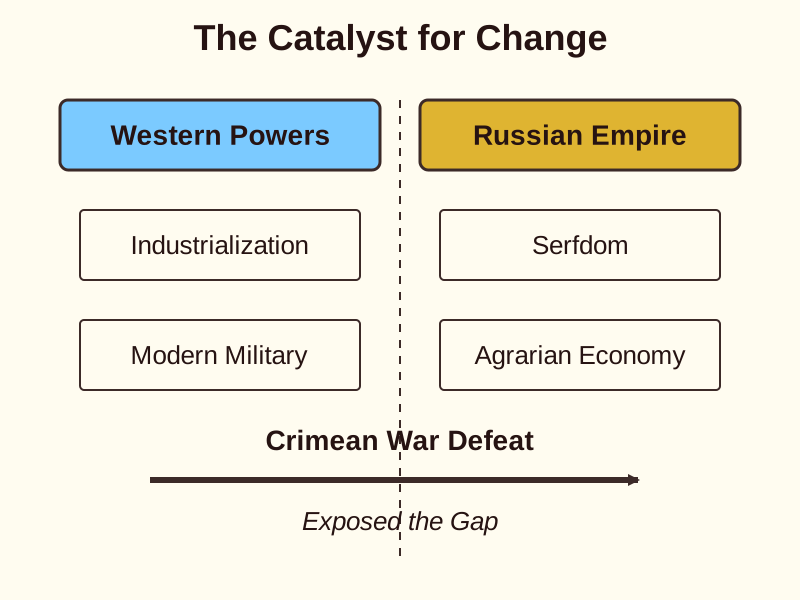
Tsar Alexander II realized the system was failing. He decided to modernize the nation from the top down to avoid a violent revolution.
The End of Serfdom
The most significant change was the Emancipation Manifesto of 1861. This decree legally freed tens of millions of serfs.
Peasants gained personal civil rights for the first time. They were no longer the property of noble landowners.
However, freedom came with a heavy price. Peasants had to pay the state redemption payments for the land they received.
- Legal Status
- Economic Reality
The Burden of Debt
The land reform was deeply flawed. The state paid the nobles for the land, but the peasants had to pay the state back over many years.
These debts often left families in extreme poverty. Many peasants received poor-quality land that could not support them.
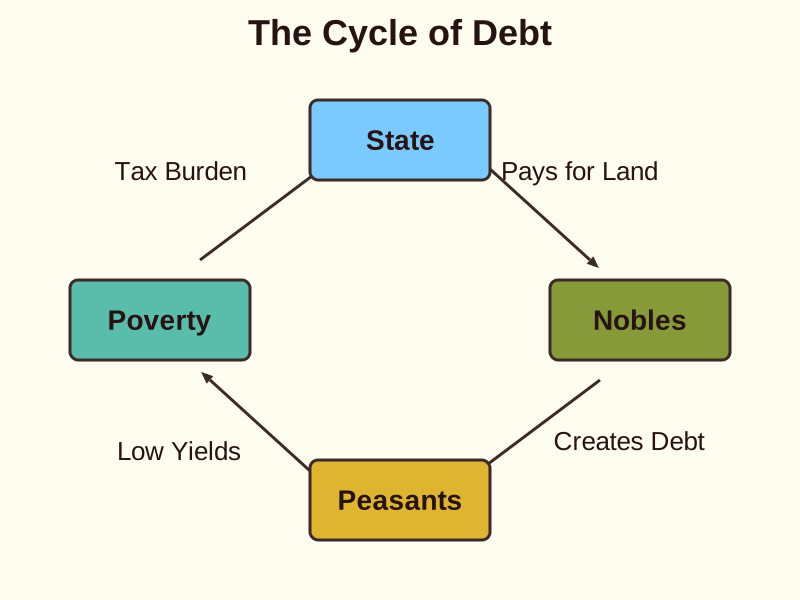
Instead of creating a stable middle class, the reform left many people bitter and economically trapped.
Reforming the State
Alexander II did not stop at freeing the serfs. He introduced the Zemstvo system to allow for local self-governance.
These assemblies managed schools, roads, and healthcare in rural areas. He also modernized the military and the legal courts.
These changes gave citizens a taste of participation. Yet, the Tsar refused to give up his absolute power as an autocrat.
The Seeds of Revolution
The Great Reforms fundamentally changed Russian society. They created a more modern state but also caused new tensions.
By granting limited freedoms, the government encouraged people to ask for more. Radical groups began to demand total political change.
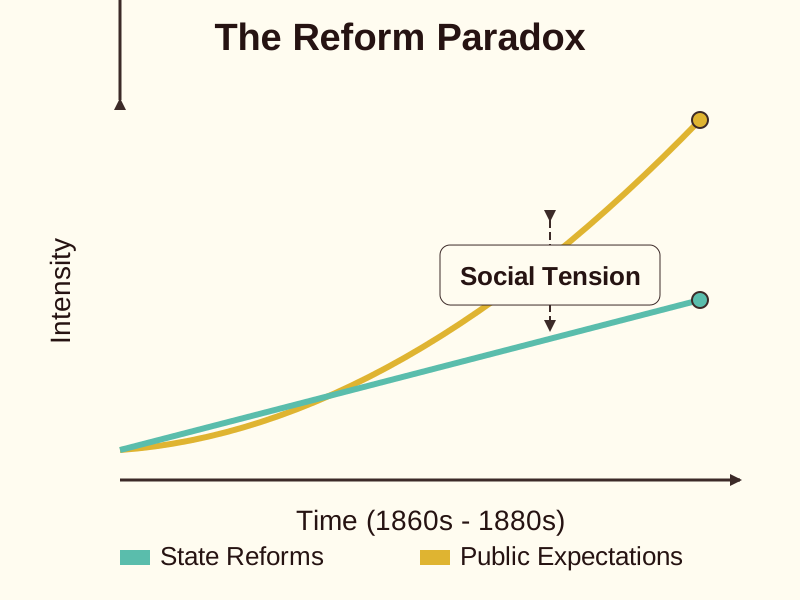
These reforms inadvertently paved the way for the revolutionary movements that would eventually end the Romanov dynasty.
Putting It All Together
- Crisis: Defeat in the Crimean War forces the Tsar to acknowledge Russia's backwardness.
- Liberation: Serfs are freed in 1861, but are burdened with massive debt and poor land.
- Modernization: New systems for local government and law give citizens a taste of autonomy.
- Instability: Partial freedom encourages radical groups to demand the end of autocracy.
Check yourself
The primary reason Alexander II began the Great Reforms was the Russian defeat in the _____.
- Crimean War
- Napoleonic Wars
Answer: Crimean War
The Crimean War (1853–1856) exposed Russia's industrial and military weaknesses compared to Western Europe.
To modernize local governance, the Tsar created _____, while the legal system was updated through new _____ reforms.
Answer: To modernize local governance, the Tsar created Zemstvos, while the legal system was updated through new Judicial reforms.
Zemstvos were local assemblies for self-governance; judicial reforms modernized the courts and legal rights.
Why did the Emancipation Manifesto of 1861 often lead to increased poverty for Russian peasants?
- They were forced to pay long-term debt for their land
- They were forbidden from farming their own crops
- They lost their personal civil rights after the reform
- The state seized all peasant-owned tools and livestock
Answer: They were forced to pay long-term debt for their land
Peasants were legally free but were burdened with 'redemption payments' to the state to pay for the land they received.
Keep going
This is lesson 1 of 6 in 19th-Century Imperial Russia. Next up:
- Autocracy's Limits
- European Geopolitics
- Imperial Expansion
- Class Structures
- Economic Growth
Wondering turns any topic into short lessons you can read, watch, or listen to, with practice questions and an AI tutor.