Free sample lesson · 11-Day SAFE Exam Comprehensive Review
TILA/RESPA
Can you identify which disclosures must be sent within three business days of application?
Lesson 1 of the Wondering course 11-Day SAFE Exam Comprehensive Review
The Pillars of Mortgage Law
The Truth in Lending Act (TILA) and the Real Estate Settlement Procedures Act (RESPA) are the foundation of mortgage compliance.
TILA focuses on the cost of credit. It ensures you understand the terms of your loan before you sign.
RESPA governs the settlement process. It prevents hidden costs and unethical referral fees during the closing of your home loan.
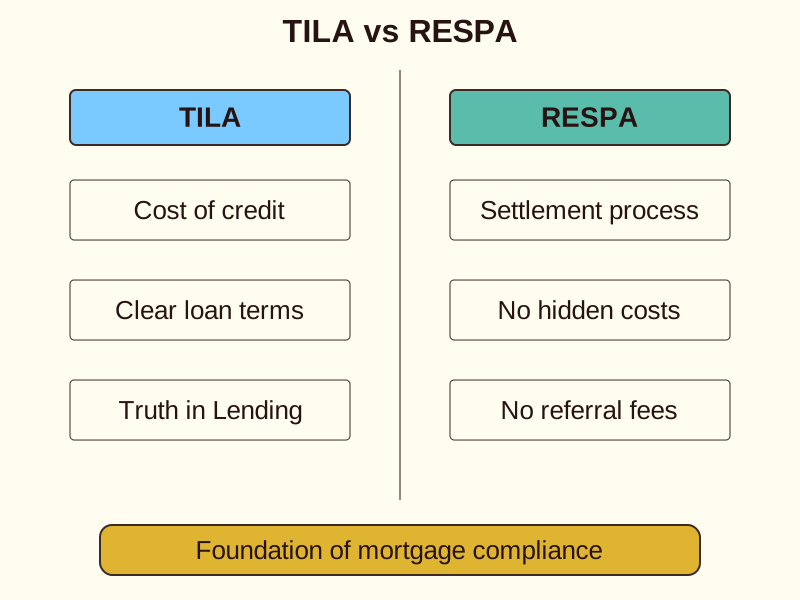
Understanding TILA and RESPA Roles
TILA is implemented by Regulation Z. Its primary goal is to disclose the Annual Percentage Rate (APR) and other credit terms.
RESPA is implemented by Regulation X. This law targets the actual costs of the settlement process.
RESPA strictly prohibits kickbacks and unearned fees. These rules protect consumers from paying inflated prices for third-party services.
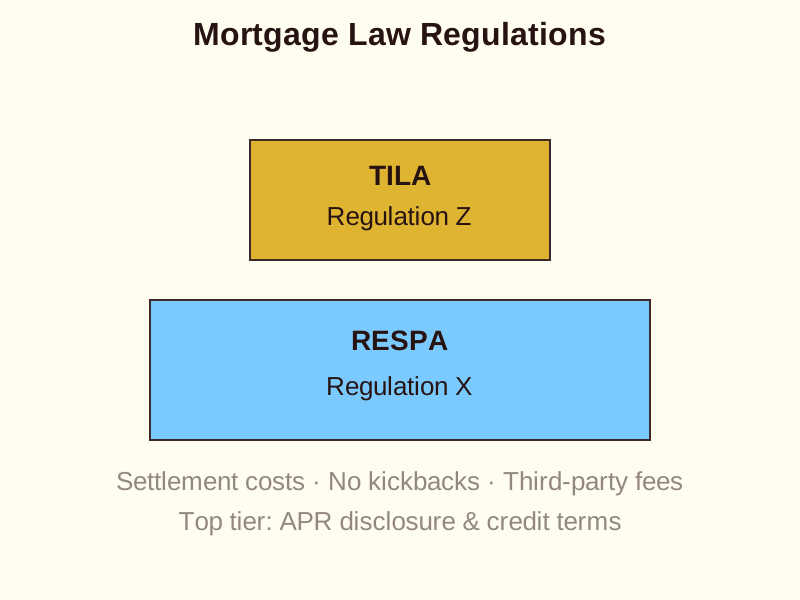
The TRID Integrated Disclosure Rule
The TILA-RESPA Integrated Disclosure (TRID) rule combines these laws into a single system. This creates transparency for the borrower.
Lenders must provide two main documents: the Loan Estimate and the Closing Disclosure.
These forms prevent surprises at the closing table. They allow consumers to shop for the best mortgage products available.
- Combine Laws: TILA and RESPA merge into a single system to create borrower transparency.
- Loan Estimate: Lenders provide initial estimated costs and loan terms to the borrower.
- Closing Disclosure: Final costs are detailed before closing to prevent surprises and allow shopping.
Critical Timing and Compliance
Timing is vital for federal compliance. The Loan Estimate must be delivered quickly to the consumer.
You must mail or deliver this document within 3 business days of receiving a loan application.
Mastering these timelines is essential for your MLO exam. It ensures you protect client interests while maintaining strict federal standards.
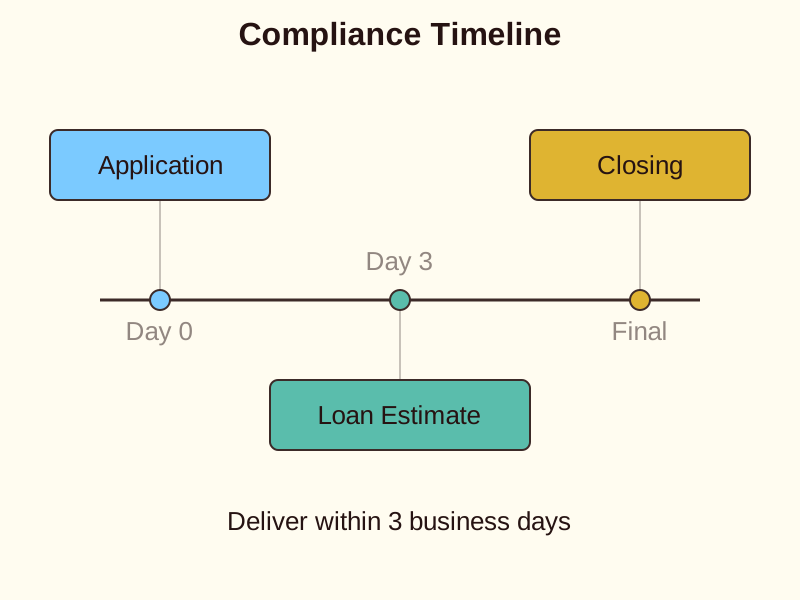
Putting It All Together: TILA and RESPA Compliance
- Identify Act: Determine whether the rule falls under credit costs or settlement procedures.
- Check Regulation: Apply the correct implementing regulation for disclosures or fees.
- Track TRID and Timing: Deliver required documents within the mandatory federal timeline.
Check yourself
Truth in Lending Act (TILA) compliance is governed and implemented by _____.
- Regulation Z
- Regulation X
Answer: Regulation Z
TILA is implemented by Regulation Z (focusing on credit terms like APR), whereas RESPA is implemented by Regulation X.
In mortgage law, _____ focuses on cost of credit transparency, while _____ regulates the settlement process and prohibits illegal kickbacks.
Answer: In mortgage law, TILA focuses on cost of credit transparency, while RESPA regulates the settlement process and prohibits illegal kickbacks.
TILA ensures borrowers understand credit costs like APR, whereas RESPA governs the settlement process and protects consumers against kickbacks and unearned fees.
Under TRID compliance rules, within how many business days of receiving a loan application must a lender deliver or mail the Loan Estimate to the consumer?
- 3 business days
- 5 business days
- 7 business days
- 10 business days
Answer: 3 business days
Federal standards require lenders to mail or deliver the Loan Estimate within 3 business days after receiving a borrower's completed loan application.
Keep going
This is lesson 1 of 8 in 11-Day SAFE Exam Comprehensive Review. Next up:
- ECOA/HMDA
- Privacy Acts
- Loan Products
- Terminology
- Fraud Detection
Wondering turns any topic into short lessons you can read, watch, or listen to, with practice questions and an AI tutor.